

THE RPC LEADERS TOOK PART IN THE DISCUSSION OF THE FEDERAL LAW DRAFT "ON INTRODUCING AMENDMENTS TO CERTAIN LEGISLATIVE ACTS OF THE RUSSIAN FEDERATION ON THE ISSUES OF COMPREHENSIVE REHABILITATION AND HABILITATION OF THE DISABLED" CONDUCTED BY THE ACCESSIB
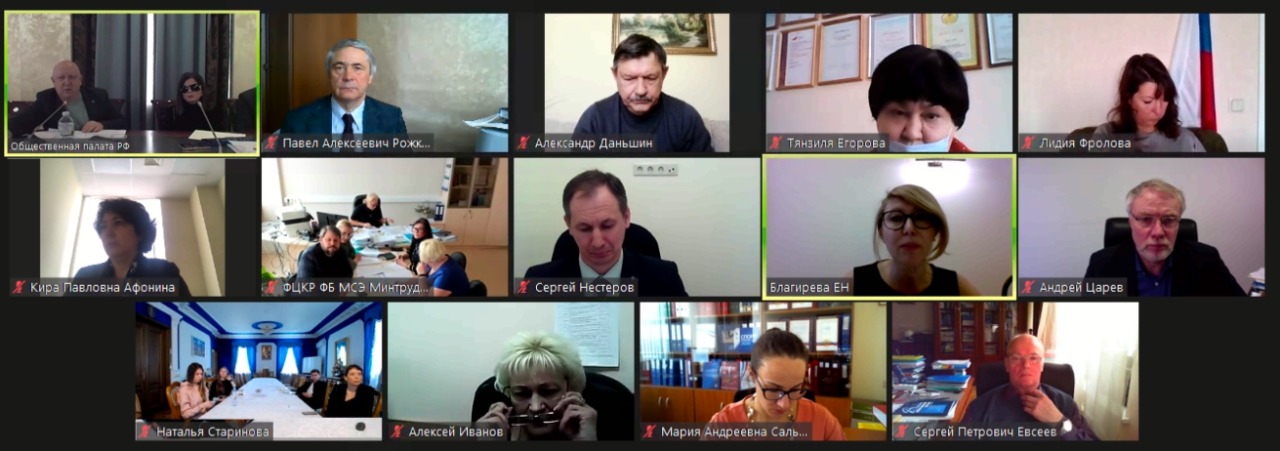
Chairperson of the Governing Board, First Vice-President of the Russian Paralympic Committee Pavel Rozhkov, Vice-President of the RPC, President of the All-Russian Federation of Sports for Persons with Intellectual Inoairments Sergey Yevseev took part in a public examination ('zero reading') of the draft federal law " On Amendments to Certain Legislative Acts of the Russian Federation on the Issues of Comprehensive Rehabilitation and Habilitation of Disabled Persons ", developed by the Ministry of Labor and Social Protection of the Russian Federation.
The meeting was chaired by Diana Gurtskaya, Chairperson of the Commission of the Public Chamber of the Russian Federation on an accessible environment and the development of inclusive practices.
The project provides for amending the Law No. 329-FZ on Physical Culture and Sports in order to legally regulate the provision of services for the physical rehabilitation of disabled people and children with disabilities using the means and methods of adaptive physical culture and adaptive sports.
The current version of the law determines that physical rehabilitation is the restoration (including correction and compensation) of impaired or temporarily lost functions of the human body and the ability to social and professional activities of disabled people and people with disabilities using the means and methods of adaptive physical culture and adaptive sports, which are aimed at the elimination or the fullest possible compensation of the disabilities caused by health disorders.
The draft law contains legal grounds allowing to establish additional powers and obligations of state and local authorities to provide disabled people with conditions for physical rehabilitation of disabled people and disabled children. The bill also proposes to empower the federal executive bodies that carry out the functions of developing and implementing state policy and legal regulation in the field of physical culture and sports with powers to develop and approve standards and procedures for the provision of such services.