

THE MAN WHO LIT THE FIRE. SERGEY SHILOV, COACH OF THE RUSSIAN NATIONAL PARA ATHLETICS TEAM, ABOUT THE WAY FROM THE OPERATING TABLE TO THE OPENING OF THE GAMES IN SOCHI
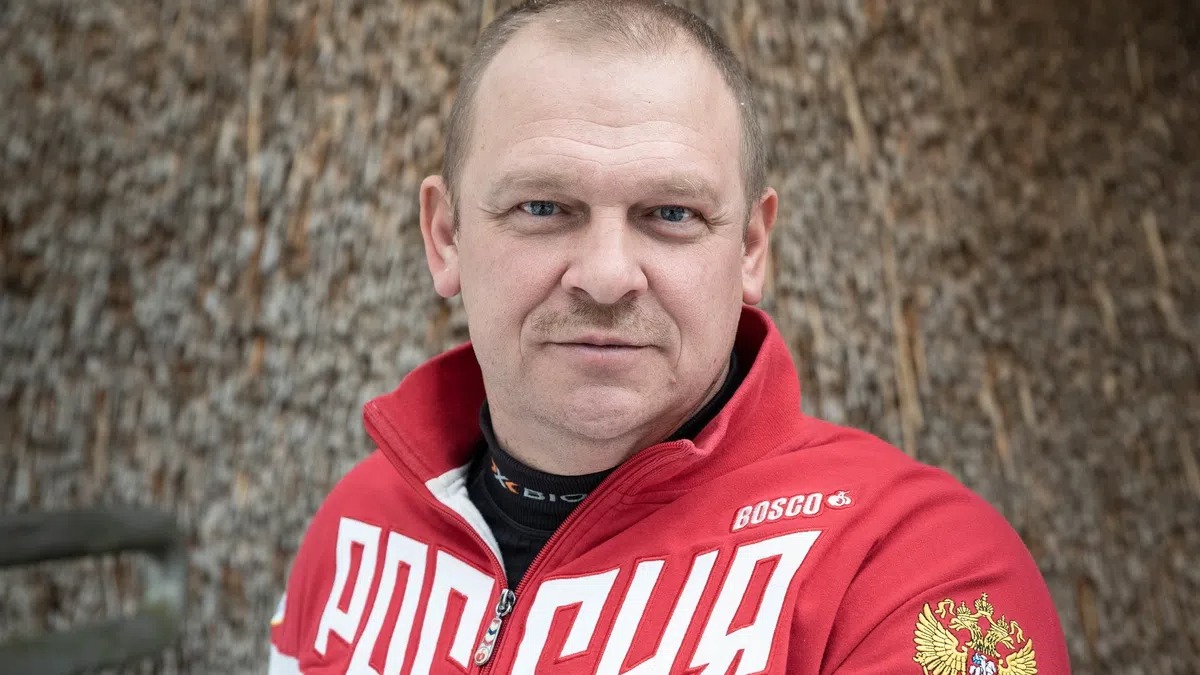
A small wooden house in the Bitsevsky forest in the south of Moscow. Inside, on the first floor, one can hear the measured creak of the simulators and the insinuating voice of the coach: "Let's work on the start still." Here, on the basis of the sports complex "Alfa-Bitsa", the Paralympic track and field athletics team under the guidance of its coach, Sergei Shilov, is also involved.
Sergei is fifty. Today he prepares athletes for wheelchair rides, but in the past he himself is a six-time Paralympic champion, a seven-time world champion in cross-country skiing, and a four-time European champion.
However, a boy from Pskov with a military dad and a postman mom dreamed not of this. Having started attending the orienteering section in the 4th grade, he believed that this knowledge would be useful in his future military career. With his team, he gladly traveled almost half of the Union, but everything changed in 1987, when Sergei was 16 years old.
- We were returning from Estonia from the competition, and it so happened that the driver lost control: the bus skidded and he fell into a ditch, - Sergey recalls. - I only had time to cover my head with my hands. By inertia, they threw me out the window and covered me with a bus from above.
Of all the schoolchildren traveling in the bus, only Sergei received a serious fracture. The diagnosis took three lines, but the meaning was the same: a fracture of the spine.
- On the day I turned 17, I had an operation. Someone meets his birthday at the table, and I met him on the table. Before the operation, they first brought me to one hospital, the doctors there said: "Oh, this is not a tenant." She said to my mom: "Mom, you don't cry, they don't survive."
And the doctors basically did nothing for two days, they just waited for me to leave. And on the second day I came to my senses and said: "I want to eat." They looked at me with such eyes for five kopecks.
Then Sergei was saved by a doctor in one of the Pskov hospitals. Having operated on, he said only one thing: “Study. You can't just lie there and wait. " And Sergey was engaged: with dumbbells, elastic bands, he inflated a balloon hundreds of times a day, so that there was no stagnation of fluid in the lungs. He believed: a couple of months more, and he will again return to the guys there, on the ski track, on the relay. But time passed, and Shilov could not get back on his feet. However, in the summer, the orienteers themselves invited him to their competition: to help and judge.
- Now it is called socialization, but then I just came with them to training and helped. They made me understand that they just need me as a person. They then did not allow me to withdraw into myself, - Sergey admits.
And then there was a rehabilitation center in Crimea, where Sergei was sent to recover. There he understood the main thing: it is not so much rehabilitation that is important as socialization and the ability to do everything yourself.
- To be honest, I have not seen people in wheelchairs before. I thought: well, there are grandmothers and grandfathers in wheelchairs, already old ones. I did not know that a very large number of young people were in wheelchairs. And in Crimea I was shocked: it turned out that people in wheelchairs not only survive, but live an active social life.
It was there, in Crimea, that the first wheelchair marathons in Russia appeared. Sergei, who previously traveled a maximum of several kilometers to the university, in 1990, together with seven children, drives 90 km from Saki to Sevastopol. In 1991, Sergey decided on another adventure: he sent an application for participation in the Moscow - Kiev - Krivoy Rog marathon, organized by the polar explorer Dmitry Shparo. Then Sergei has the first real sports stroller.
Against the backdrop of the collapsing Union, as if in spite of everything, the Paralympic movement is emerging: wheelchair races are held in Moscow, Omsk, Vilnius, Tallinn. No money is given for the victory, but prizes are given. And such starts are also an opportunity to qualify for real international competitions.
- At the championships of Russia and the CIS, I qualified for the Olympics in Barcelona in 1992. This was my first trip abroad. I did not have such a "wow" then: I did not look at architecture and living conditions. I went to the competition: to see who was running, what, what strollers and gloves they had. Everything was interesting: how foreign athletes behave at a distance, how they push. We ourselves, in fact, learned to train ourselves, paved this path ourselves, spied on foreigners. I did not even go to the next round of competitions then, I finished at the preliminary stage. But he left with an incredible desire to train.
Having moved to Moscow after his marriage in 1993, Sergei met three people who became very important in his life: Irina Gromova, her husband Dmitry and Mikhail Terentyev. For the next ten years, they will constantly train together: go to competitions, constantly ask the athletes of other teams about everything, spy on, analyze. Even the decision not only to train in wheelchairs, but also to go skiing in winter, they will make together.
- We made the first "beans" ourselves: the Germans gave us old carriages, we digested them with our friends in garages according to our drawings. 1994 Olympics in Lillehammer. We got there for the Games, and again: our eyes are like this, we look at how they run, on which skis, with which sticks. Irina Aleksandrovna is constantly in the ski preparation box, asks about everything: what lubricants, powders, what technologies. In Lillehammer, we took the last places, but we studied there again. They returned and realized that a lot had to be changed. Result - 1998, Japan: I have a gold medal, Misha has two silver and a bronze one.
Sergei and his colleagues will be learning from foreign comrades just until the 98th: then he will say that there is simply nothing to do.
- There was an interesting moment, once in Europe we got into a conversation with a coach who worked with the Dutch. They asked, "How do you train?" He says: "I have Matveyev's book, I can train anyone on it." Matveev is our methodologist, developer of cyclic sports training methods. He told us then that the best in the world has not yet been invented, our Soviet technologies are number one.
Sergey still remembers his final race as an athlete: 2011, the world championship in Khanty-Mansiysk. After 2012, he increasingly helps his coach Irina Gromova, who by that time was already heading the Russian Paralympic ski team. And in 2013, Shilov began his own career as a coach.
But the most burning moment, not only in a career, but in life, is Sochi-2014. Sergei Shilov becomes exactly the athlete entrusted with lighting the Paralympic flame.
- I may have dreamed about it, but in the most unrealizable dreams. In 1996, at the Paralympics, I remember looking at a wheelchair user who was also lighting a fire, and I thought for a second: maybe someday our country will also have a Paralympics and I could also light it? And it happened.
Today Sergey's dream and goal is to educate and train a new generation of athletes. He wants the kids in wheelchairs to look at his team and not withdraw into themselves. To this end, within the framework of the Fonbet charity program Betting on Good, he proposes to donate 100,000 rubles to the United Country Foundation for the Support of Disabled People, which implements inclusive projects to organize cross-country skiing for children and a half marathon in wheelchairs in Sochi.