

"THE MAIN VICTORY IS ABOVE YOURSELF" - VADIM SELYUKIN, SILVER MEDALIST OF THE 2014 PARALYMPIC GAMES IN PARA HOCKEY, TELLS ABOUT THE WAY IN SPORT FROM A NEWCOMER TO THE CAPTAIN OF THE RUSSIAN NATIONAL TEAM AND JUNIOR TEAM COACH
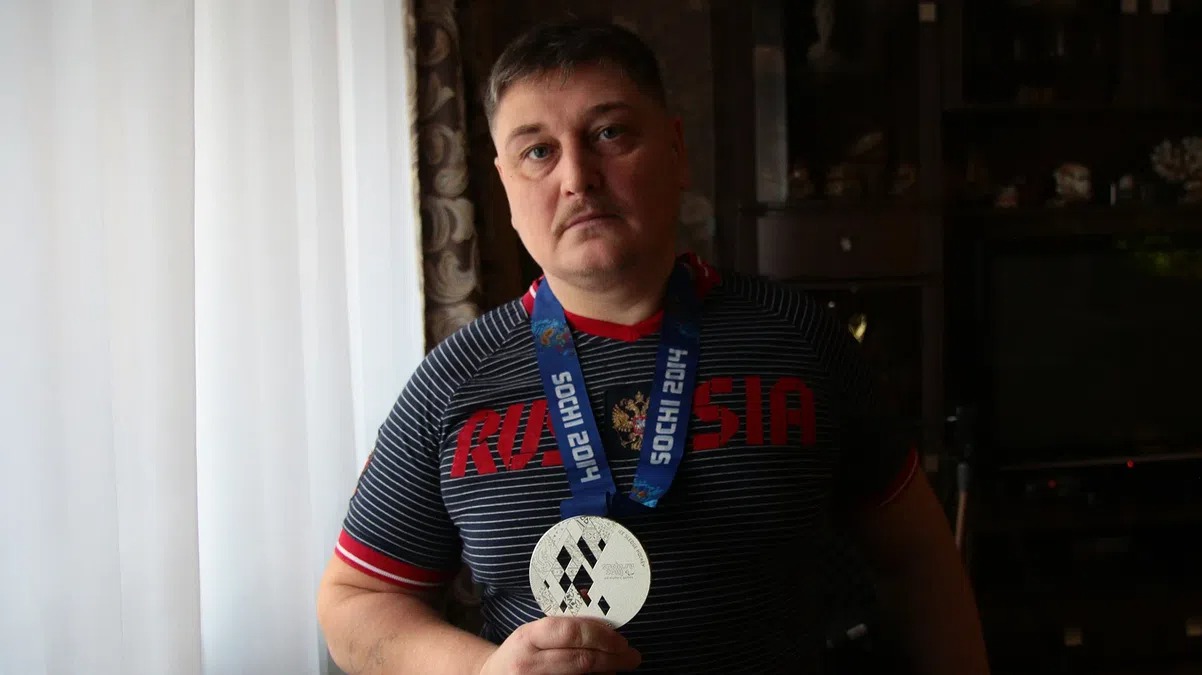
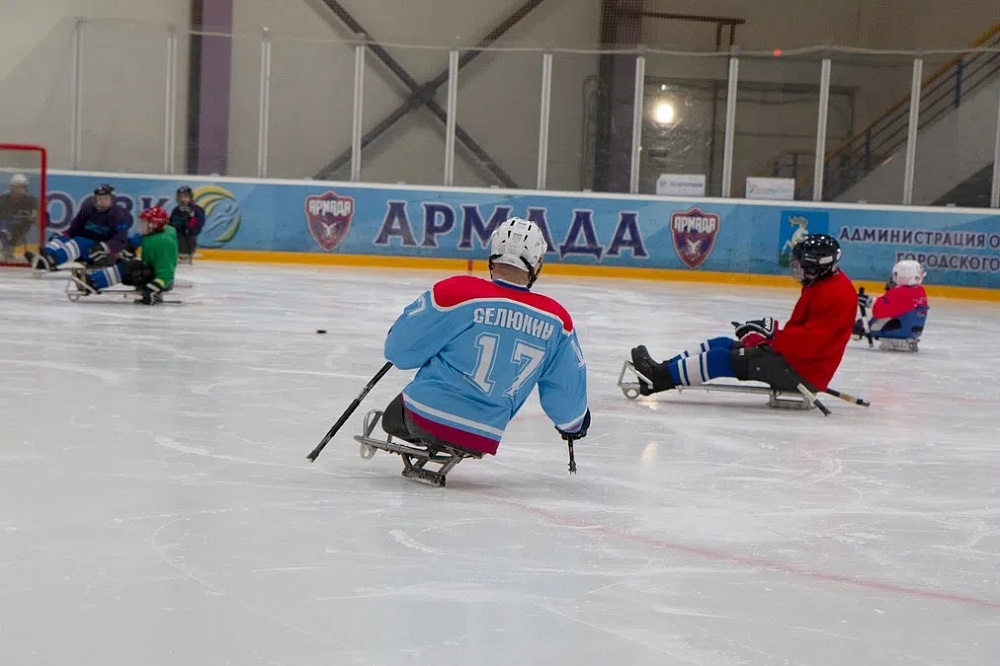
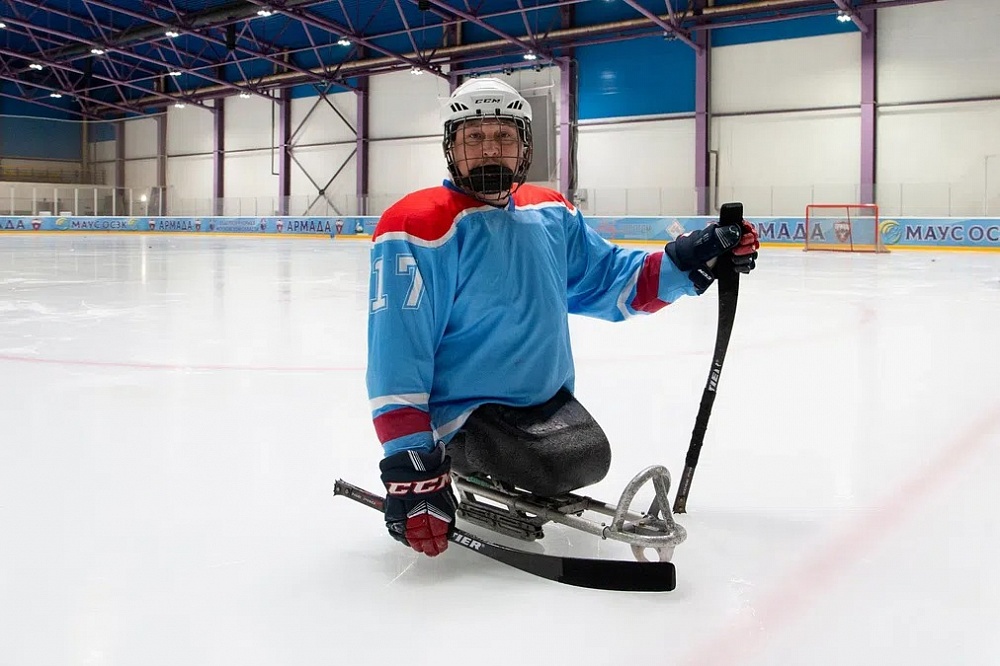
Vadim Selyukin, silver medalist at the 2014 Paralympic Games in sledge hockey, talks about the path in sports from a beginner to the captain of the Russian national team and coach of the youth team.
“The most difficult thing after the injury was to start living again. Look at myself in the mirror and understand - this is with me forever. Go outside and ignore the views. Just last week we were walking in the park, a family with a child was following us, the boy overtook me, ran around in front and looked for a long time. It is unpleasant. But we really rarely meet people with special needs on the street - they spend their lives locked up, do not leave their homes. Everyone felt this in quarantine. And millions of people in Russia live like this all their lives. Sport allowed me to break this isolation,”says Vadim Selyukin.
Vadim is a silver medalist at the 2014 Paralympic Games in Sochi. Bronze medalist of the 2013 and 2015 World Sledge Hockey Championships, European Champion 2016. Five-time champion of the country, Honored Master of Sports of Russia. And now also the first vice-president of the All-Russian Federation of Sports for Persons with Physical Impairments.
Vadim lost both legs due to an accident in military service in 2002 (he is a holder of two Orders of Courage!). After a long recovery, I decided to try Paralympic sports. He started with swimming, athletics, and competed. I found myself only in sledge hockey.
Sledge hockey is one of the most actively developing sports for people with special needs in Russia. He, like other adaptive species, helps in the social and physical rehabilitation of people with disabilities. The game of sledge hockey follows the same rules as hockey, but the players move on the ice on specialized sleds instead of skates.
Sledge hockey appeared in Russia in 2009, on the eve of the 2014 Paralympics in Sochi. Russia, as the host country, had to represent all kinds of sports, and we did not have sledge hockey. A sports base was urgently created, future hockey players spent most of the year there. At the same time, the first Russian sledge hockey championship was held, only four teams were represented at it: the Phoenix near Moscow (Vadim Selyukin's native club), the Udmurtia team from Izhevsk, Yugra from Khanty-Mansiysk and the White Bears from Moscow.
“At the first training camp we were shown a video, tactics were shown what hockey is all about. But in the beginning there was not even a sled. They were brought to the end of the training camp. And before that, we trained in the gym, with a ball. When the sled was brought in, we thought that we are now, so nimble, we will begin to ride in the same way as in the video. And how we started to fall! It is even impossible to resist, whatever it is. You push and fall.
And even when we started to drive more or less fast, we thought we were oh-ho. We arrived at the first competition in Tallinn. We lost there 15: 0. Four times in a row, ”Vadim recalls.
Until 2013, inclusive, Vadim was the captain of the Russian national sledge hockey team, under his leadership, the team took bronze at the 2013 World Championship. In 2014, as part of the Russian national team, Vadim won the silver medal at the Paralympic Games, in 2015 again bronze at the World Cup. And in 2016, the Russians became European champions. Vadim was also named the best striker and scorer of the first Russian championship in 2009, the best striker at the 2013 Four Nations International Tournament in Sochi and the best defender of the 2016 Russian Championship.
In 2018, he retired from professional sports. Vadim was injured in the chest and back during the game, another player drove into him with a sled. Vadim was recovering for six months, almost did not get up.
However, he decided not to quit sports, but became the coach of a children's team in Odintsovo, near Moscow.
Sledge hockey has gained its popularity not only among adults, but is also becoming more common among children with special needs. Now there are sledge hockey teams not only in Moscow and St. Petersburg, but also in Izhevsk, Novosibirsk, Ulyanovsk, Cheboksary and Chekhov.
In world practice, underage sledge hockey players are conventionally divided into three categories - professional athletes with competitive ambitions, amateurs and athletes with serious physical impairments that do not allow them to play independently. Such guys on the ice need helpers, they are called "pushers", they push the athlete, help him keep his balance.
“The result in such sports should not come first. In the Russian Children's Sledge Hockey League there is no division into sports and amateur classes, the whole team travels to competitions and training camps, regardless of physical limitations. We have guys who can't even control their hands. And for them, this is pure rehabilitation. They have a chatter in their dressing room. For this, everything is being done,” - Vadim comments.
Adaptive sports enable children and adults to overcome social stigma. Get positive emotions, learn independence, rely more on your own strength, and not the help of others. Parents play a very important role in the lives of children with special needs. But their task is not only to help and support the child every day, but to teach him self-sufficiency. Parents who understand the importance of social adaptation send their children to classes in the Paralympic sports section:
“The most important thing here is victory over oneself. When we started online classes at the beginning of quarantine, many guys were put on the simulator by mom or dad. And now I see that they are already floundering, climbing. Somewhere they got used to: “Mom, give! Give me a ball! " And here already: the ball fell - he got down, he picked it up, he climbed up. Self-reliance appears. Once again, I did not call my mom and dad, I did without help. This is important, this is a victory. And we are trying to put this at the forefront ”.
Of course, those who triumph over themselves need help. Within the framework of the Fonbet charity program Betting on Good, the Parasport Foundation, which has been supporting Russian Paralympic athletes for more than 15 years, will receive 100,000 rubles.